Campfire Cooking with Balance: Learn to Master the Heat

Campfire Cooking with Balance: Learn to Master the Heat
Few things compare to the smell of food cooking over an open flame. Campfire cooking brings people together, slows down time, and connects us to the outdoors — but it also demands patience and skill. Fire is alive and unpredictable, and learning to read its rhythm is key. Here’s your guide to mastering the art of campfire cooking — finding balance between flame, ember, and flavor.
Understanding the Fire’s Rhythm
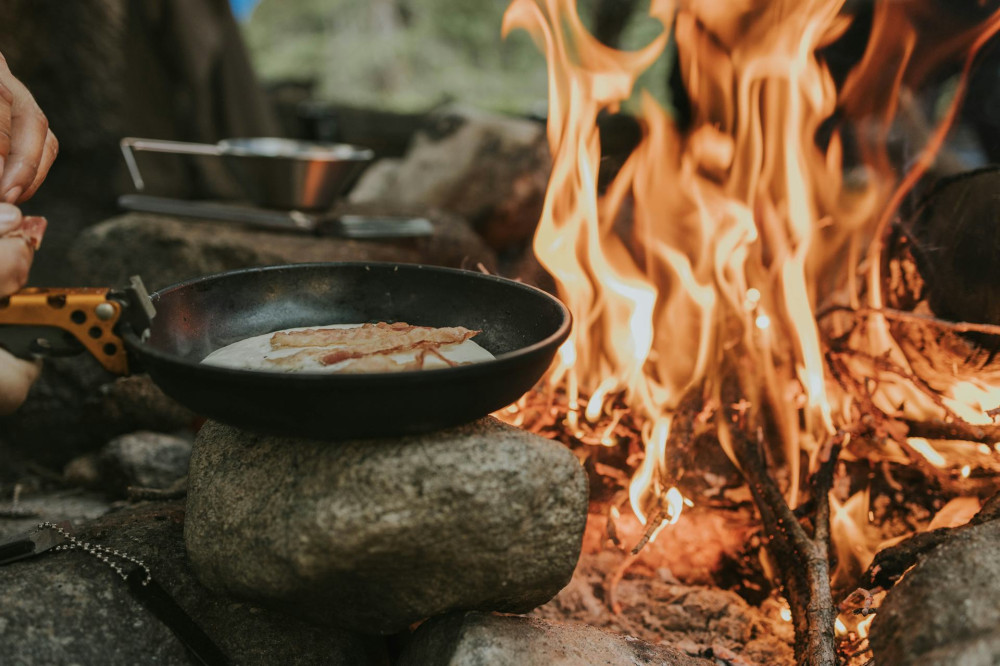
A great campfire meal starts long before you set a pan over the flames. It begins with understanding how fire develops. Fresh flames are bright and hot, but they’re too wild for cooking. What you really want are glowing embers — they provide steady, even heat.
Build your fire in layers: start with dry twigs and tinder, add small sticks, then larger logs on top. Once the flames die down and you’re left with glowing coals, you’re ready to cook. This usually takes 30–45 minutes, so plan ahead.
A helpful trick: create two heat zones — one with strong embers for searing and another with gentler heat for simmering. That way, you can move your pot or skillet as needed.
Gear That Makes a Difference
You don’t need a full outdoor kitchen to cook well over a campfire, but the right tools make the experience easier and safer.
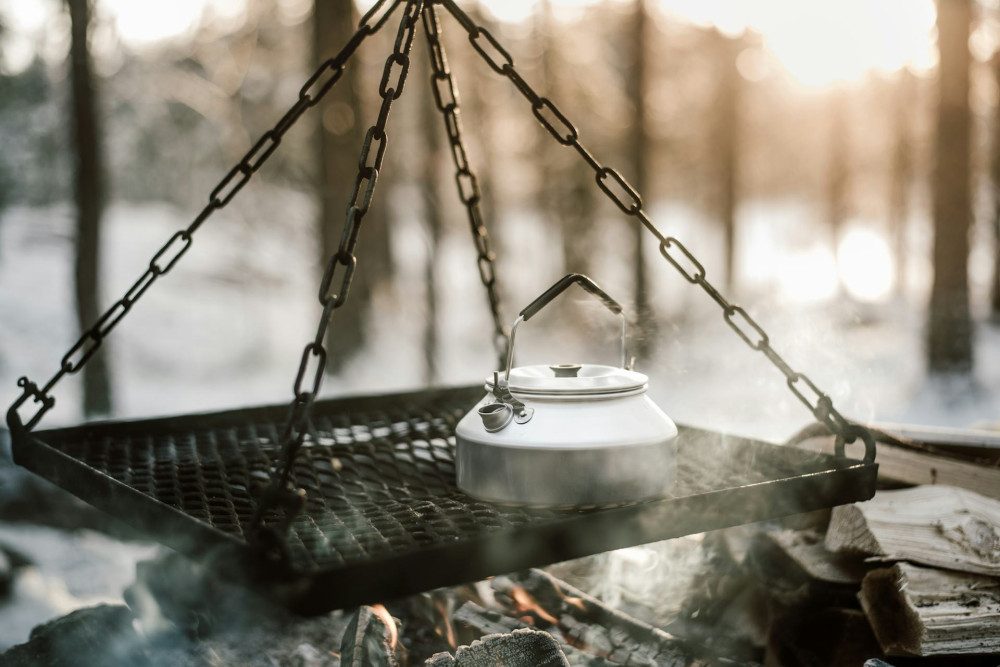
- Grill grate or tripod – provides stability and lets you adjust height over the coals.
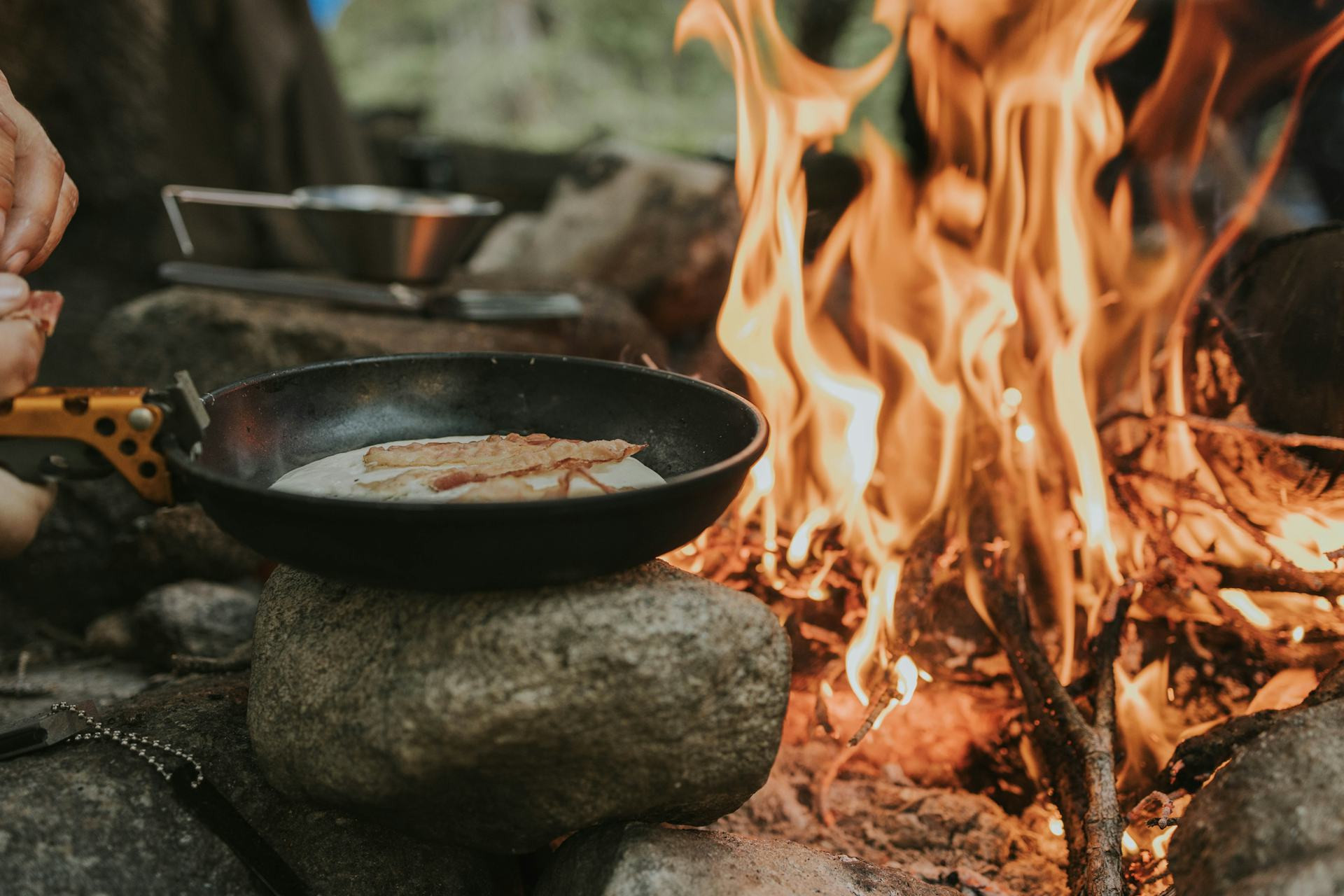
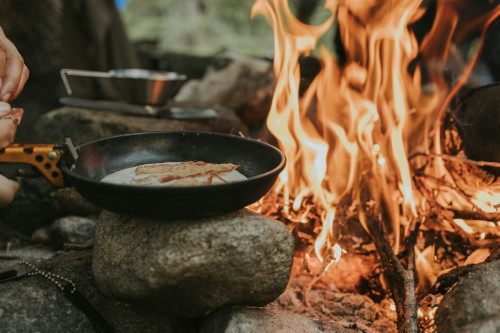
- Cast-iron pot or skillet – retains heat beautifully and can handle direct contact with embers.
- Heat-resistant gloves and tongs – protect your hands when moving cookware.
- Cutting board and knife – for prepping ingredients on-site.
- Bucket of water or sand – always keep it nearby for safety.
Once you’ve cooked a few meals with simple gear, you’ll realize how little it takes to create something memorable.
Temperature Control – The Art of Adjusting Heat
Unlike a stovetop, you can’t just turn a knob to control a campfire. You manage heat through distance, ember density, and airflow.
For high heat, push the coals together and keep your pan close. For a gentle simmer, move your pot to the edge or raise it higher above the fire.
Another tip: mix wood types to fine-tune your heat. Hardwoods like oak and hickory burn long and steady, while softwoods like pine or cedar ignite quickly and are great for quick bursts of heat.
Pay attention to the signs: if oil smokes, the fire’s too hot; if food isn’t sizzling, move closer to the coals. Finding that balance takes practice — but that’s part of the fun.
Ingredients That Shine Over the Fire
Campfire meals don’t need to be complicated. In fact, simple dishes often taste best when kissed by smoke and flame.
- Vegetables like potatoes, carrots, and onions can be wrapped in foil and roasted in the coals.
- Meat and fish gain incredible flavor when seared in a skillet or grilled on skewers.
- Breads and pancakes cook beautifully in cast iron — try flatbreads with herbs or cornbread batter.
- Soups and stews are perfect for campfire cooking since they can simmer slowly while you relax.
Cut ingredients into even pieces so they cook evenly, and use local or seasonal produce when possible — it adds freshness and a sense of place to your meal.
Læs også:

Safety and Respect for Nature
Always build your fire with care. Check local fire regulations and use established fire rings or pits whenever possible. Avoid lighting fires during dry or windy conditions.
Keep water or sand close by, and make sure the fire is completely out before leaving your site. Pack out all trash, and use only fallen wood — never cut live trees.
Cooking outdoors means being a guest in nature’s kitchen. Treat it with respect, and it will reward you with unforgettable experiences.
Enjoy the Process – Not Just the Meal
Campfire cooking isn’t just about eating — it’s about the experience. You feel the warmth, hear the crackle, and smell the smoke. It takes patience, but the reward is a meal that tastes of time, presence, and the wild.
Take your time. Cook with friends, share the tasks, and let conversation flow as the embers glow. That’s where the true balance lies — between the fire’s energy and your own calm.
Læs også: